Swimming pool contractors in Singapore who also handle maintenance tend to stay connected to a pool well past handover, covering water chemistry, equipment servicing, and structural checks so small problems get caught before they turn expensive. Builders who treat construction and maintenance as separate businesses often leave owners hunting for a second company within the first year, which is why more buyers now ask about maintenance capability before signing a construction contract.
A pool that looks finished on handover day is really just getting started. Concrete cures, tiles set, pumps run their first cycles, and everything looks pristine, but the real test comes months later when chlorine levels drift or a filter clogs during a wet week. PoolParty is one of several Singapore firms that treats construction and maintenance as one continuous relationship rather than two separate transactions, and that distinction matters more than most first time pool owners realize when comparing quotes.
What Do Swimming Pool Contractors in Singapore Handle After Construction?
Handover is rarely the finish line it appears to be. Most reputable contractors stay on for equipment commissioning, initial water balancing, and a defects period where workmanship issues get fixed at no extra charge. What happens after that defects period, though, varies enormously between firms, and that gap is where a lot of pool owners get caught out.
Why Does Pool Construction Quality Affect Long Term Maintenance Costs?
Poor pipe routing, undersized filtration, or rushed waterproofing during the build shows up later as leaks, algae blooms, or pump strain that no amount of good maintenance can fully offset. A contractor who understands maintenance tends to design differently from day one, sizing equipment for the actual usage pattern rather than the cheapest spec that clears inspection. That upfront judgment call is invisible on handover day and only becomes obvious two or three years in.
What Maintenance Tasks Should a New Pool Owner Expect in the First Year?
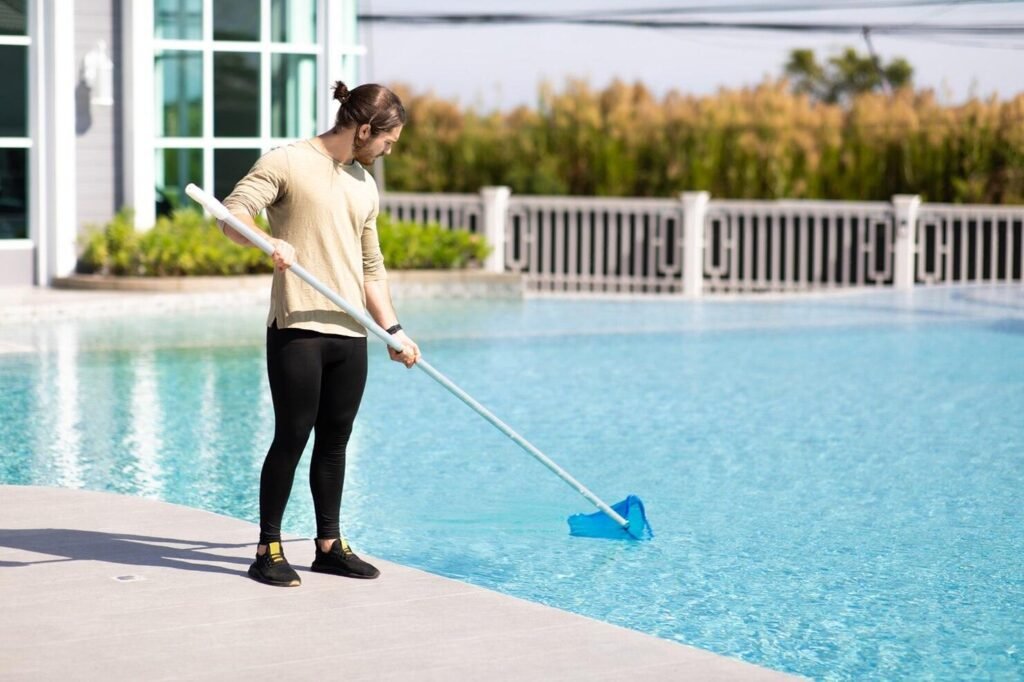
The first year sets the pattern for everything after it, and most of the tasks are routine rather than dramatic. A new pool owner in Singapore should generally plan for the following:
- Weekly to fortnightly chemical testing and dosing, since Singapore’s heat and rain accelerate chlorine breakdown
- Filter cleaning or backwashing on a schedule tied to bather load, not a fixed calendar date
- A pump and motor check every few months to catch early bearing wear or seal leaks
- At least one full structural walk through before the twelve month defects period closes
None of this is complicated on its own, but skipping it quietly compounds into the kind of repair bill that surprises people in year two.
Which Warning Signs Suggest a Pool Needs Professional Attention Soon?
Most pool problems announce themselves quietly before they become urgent. Owners who catch these early tend to spend far less over the life of the pool:
- Cloudy or green tinted water that persists after normal dosing
- A pump that runs louder, hotter, or less consistently than before
- Water level dropping faster than evaporation alone would explain
- Tile grout or coping stone that feels loose or shows hairline cracks
Any one of these on its own might be minor, but ignoring two or three at once usually means the underlying issue has already spread.
How Do Singapore’s Climate and Rainfall Patterns Affect Pool Upkeep?
Singapore’s combination of heat, humidity, and frequent rain is genuinely tough on pools, and it is not just marketing language. The National Environment Agency requires licensed aquatic facilities, including condominium pools under a Management Corporation Strata Title, to run regular water quality monitoring and comply with stipulated regulatory limits for parameters such as residual disinfectant, with free chlorine kept between 1 and 3 parts per million and pH held between 7.2 and 7.8 for chlorinated pools. Heavy rain dilutes and destabilizes those levels faster than most owners expect, which is part of why testing frequency matters more here than in drier climates.
What Should Buyers Check Before Signing a Pool Construction and Maintenance Contract?
A contract is the moment to ask the questions that get glossed over in the sales pitch, and a few specifics are worth confirming before signing anything:
- Whether maintenance is offered under the same company or outsourced to a third party
- What the defects period actually covers, and what falls outside it
- Response time commitments for equipment failures, not just routine servicing
- Whether pricing for post handover maintenance is fixed upfront or quoted later
Getting these in writing before construction starts avoids the awkward renegotiation that happens once a pool owner has no leverage left.